Your Novel Is Already a Level Map
When I started building a game set inside Kindred Slayer, I assumed the hard part would be inventing levels. Games and novels pace themselves differently, and I expected to spend weeks translating one into the other.
The book had done most of that work already. I just had to read it the way a player would walk it.
This is the first of three dev diaries on the new game. I am keeping the mechanics close to the chest for now, so these pieces are about the craft underneath: what a novelist knows that a game needs, and what building one teaches you back about the page.
The Reader Walks a Route
Open your manuscript and list every place the reader stands, chapter by chapter, in the order they arrive.
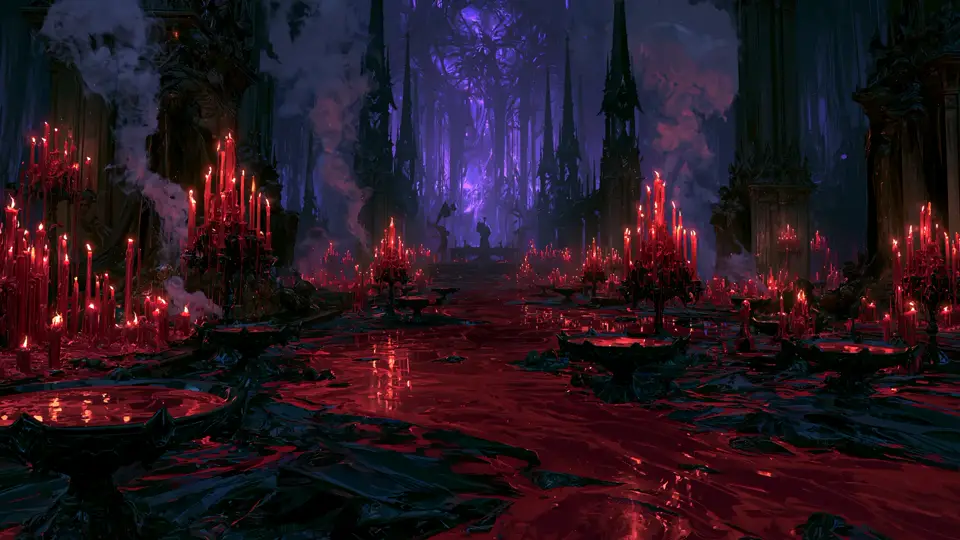
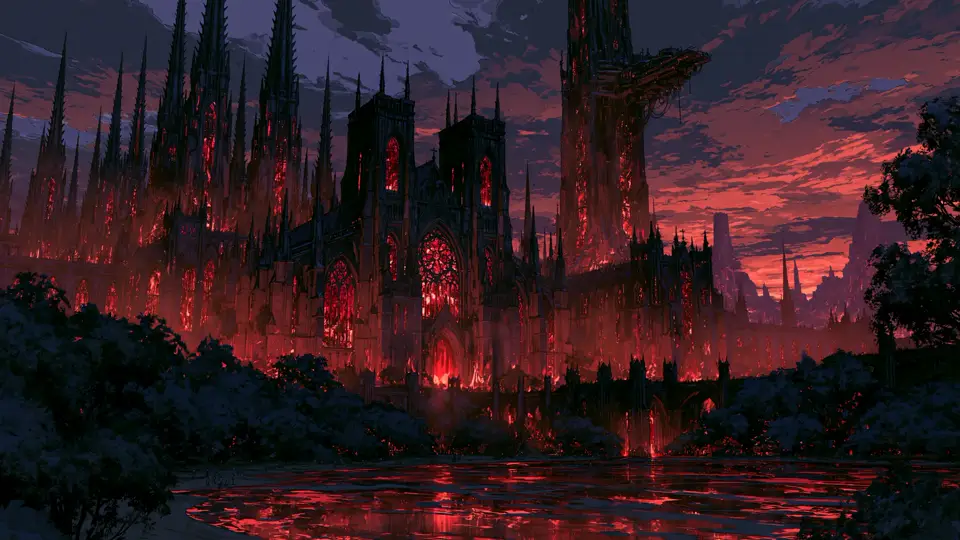
That list is a route, and it is more deliberate than you remember writing it. Kindred Slayer opens its violence at the edge of a graveyard, in outer fields where the ground has gone to ash, then pushes inward toward a wall built from bodies, then past it into ground that belongs to something worse. I wrote those chapters for dread. Read as a route, they are a ladder: open ground first, a fortified barrier second, the antagonist’s territory third.
A level designer would have to invent that ladder. The novel arrived with it.
So the game’s first area follows the book’s walk in three stretches, starting in the open ash fields where a new player has room to learn and ending in the territory of the man the whole sequence has been building toward. I took that order straight from the chapters.
The order you put your places in was paced for dread long before anyone thought to play it.
Escalation Is a Difficulty Curve
Every competent dark novel raises its stakes in steps, each threat costing more than the last. Writers call that rising action, and game designers spend a great deal of effort tuning the same thing, the difficulty curve, so a player feels challenged without feeling cheated.
Your book has tuned it for a reader, and that tuning transfers better than you would expect because the emotional logic matches. Show a reader the worst monster on page ten and they stop believing in it by page two hundred; give a player the hardest fight in the first five minutes and they quit.
When I mapped the game’s threats against the chapters they come from, the order of difficulty fell out almost on its own. Creatures the book introduces early suit a new player, and the ones it saves for after the protagonist has grown should wait until the player has grown too. Whenever I was tempted to move a frightening creature earlier because it looked good on screen, the book argued back, and it was right.
The Villain Sits Where the Chapter Breaks
In a novel, the antagonist’s big scene comes where the pressure peaks. Put it earlier and the climax has nothing left to spend. Put it later and the reader has exhaled.
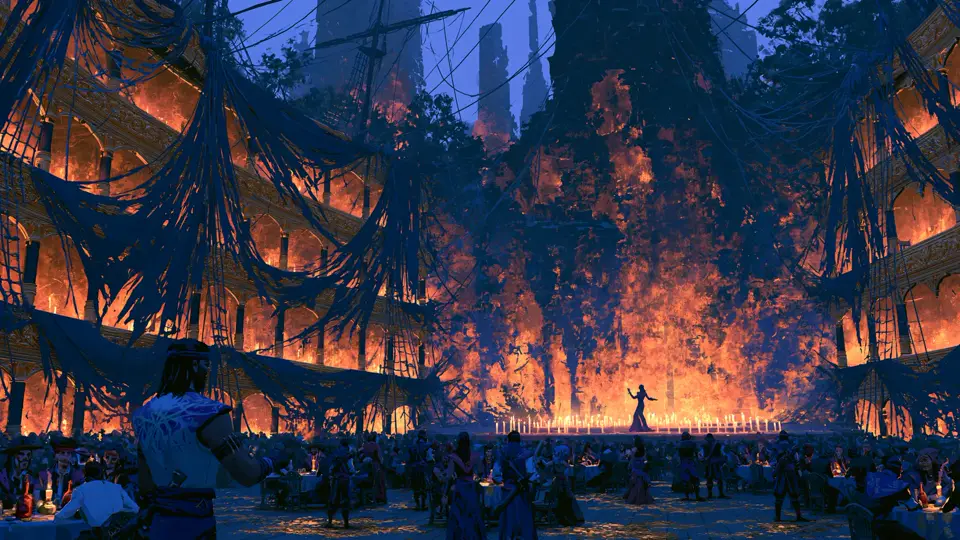
A boss fight works the same way: everything before it exists to make you dread it. The graveyard’s master waits at the end of the third stretch because that is where the book makes the reader face him, and the game inherited the placement.
This also tells you which characters should never be fights. A villain whose power in the book comes from being unseen loses that power the moment a player can click on him. Some antagonists belong in the scenery and in what other characters say about them. Your book has made that call too, by deciding who the reader meets face to face.
A villain met too early becomes furniture.
Your Chapter Breaks Are Places to Rest
Readers need rests. A dark novel that never lets you breathe goes numb, which is why the best horror follows each blow with a calmer scene.
Games need them for the same reason. Where the protagonist catches her breath in the novel, the game gives the player a safe point to recover and decide whether to press on, and where the book allows no rest, neither does the game.
The book’s calm scenes turned out to matter as much as its fights. They mark where the player should be allowed to put the phone down without losing anything, and a game that respects those moments earns the next session.
What the Map Leaves Out
A map drawn from your book will be smaller than your world, and that is fine. The reader visits a fraction of the places your lore contains, and the game should follow the reader, because that path is where your pacing lives. The rest of the world can wait for later areas, and it gains something by waiting: a place the reader has only heard about becomes a place the player wants to reach.
I also kept the book’s own words wherever the game needed a line, a choice I wrote about in the Cosmic Grimdark build log. Your prose has a voice that game text written fresh will lack, and the reader who knows the book hears it immediately.
The Exercise
Here is the version you can run on your manuscript tonight, whether or not you ever build a game.
List every place in reading order. Only the places the reader stands in, one line each, with the chapter number beside it.
Rate the threat at each one. A number from one to five for how bad things get there, so you can see the climb as a column of numbers.
Mark the rests. Every scene where the characters stop to breathe gets a mark, even the short ones.
Circle the confrontation. Find the chapter where your antagonist finally stands in front of the protagonist.
Then read the list as a level map. You will see whether the threat climbs or stalls, and whether your villain arrives at the peak or wanders in early. Half the time the map confirms the book is sound. The other half it shows you a sag in the middle that no amount of line editing would have revealed, because you were reading sentences and the problem sat in the sequence.
Your finished manuscript is a design document. Read it like one and the game starts to take shape.