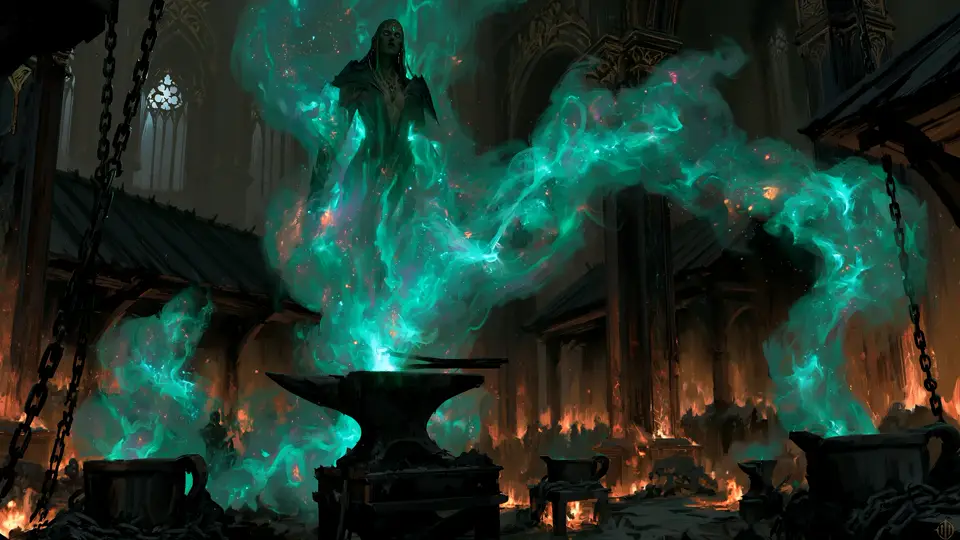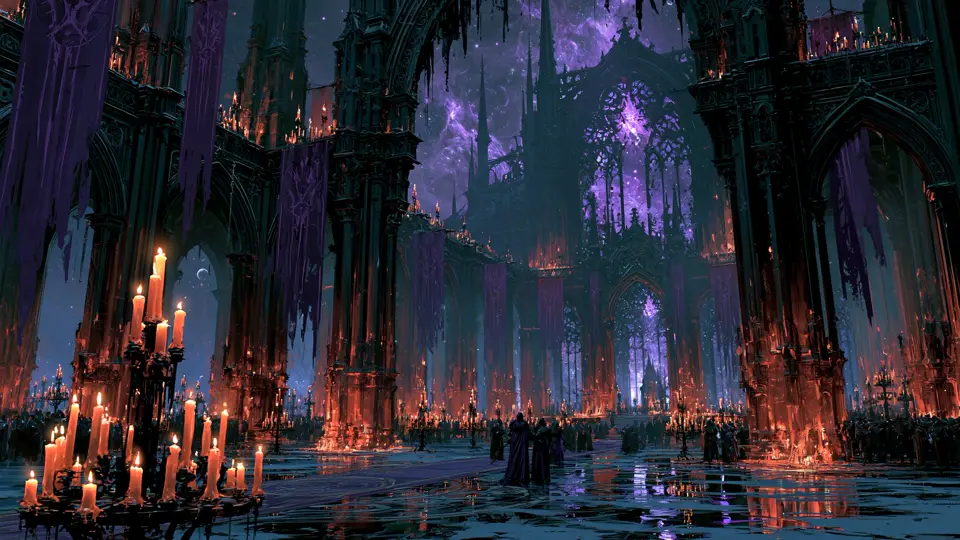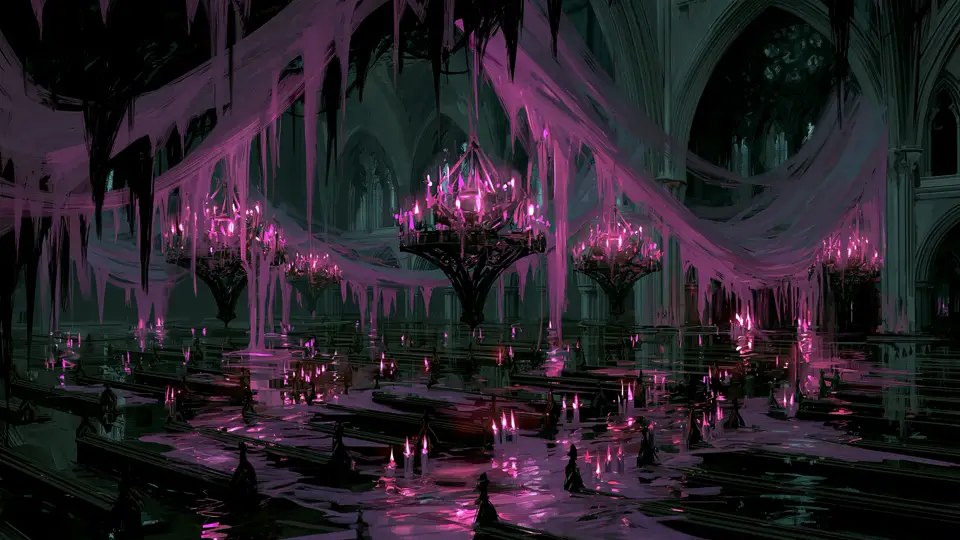
The Look Is a Law: Rescuing a Game From Its Own Menus
There is a failure mode nobody warns you about when you build games with a model, and it is not hallucination and it is not bad code. It is competence in the wrong direction. The first playable build of Courtesana, the castle-night poker roguelite set in my erotic grimdark series, was correct. The engine was deterministic. The win-rate bands were certified. The unit suite was green. And the screen looked like a tax form that had been to one masquerade.
Tiny portraits in gray boxes. A column of buttons. Menus that opened onto menus. My books are velvet and candlelight and a house that eats people, and the game of those books greeted the player like a spreadsheet with a nice wallpaper. I said so, with the exact amount of profanity the moment deserved, and the interesting part of this post is what happened after, because the fix was not a redesign. The fix was jurisprudence.
Taste Dies Between Sessions. Law Survives.
The trap with model-built software is that every working session starts fresh. You can art-direct one build into beauty, and three sessions later a new feature arrives wearing the old ugliness, because the beauty lived in the conversation and conversations end. The balance side of this project had already solved that problem. Win-rates live inside written bands, and a bot plays thousands of nights in CI so that the numbers cannot drift without the build turning red. The voice side solved it earlier still, with a lint that reads every player-facing string against my style guide.
The look was the last lawless territory. So we wrote the law.
It sits in the project canon now, a short numbered document the model must obey the way it obeys the md5 pin on the content file. Venue art runs full bleed behind everything, never strangled behind a dark overlay. Content lives on glass, blurred panels floating over the painting, never solid gray plates. Foes loom at real size, because a boss the size of a postage stamp is not a boss, it is an icon. Boss arrivals get a showdown, a full-screen stop where the head of the table looks at you before the cards come out. Damage gets callouts and screen shake and pain flashes. Desktop is the source of truth and the phone is a compression of it, never the other way around, because designing for the small screen first is how you end up with a column of buttons wearing a nice wallpaper.
None of these sentences are suggestions. They read like requirements because they gate work the same way requirements do. When a later wave added a casino floor to the game, the floor arrived with full-bleed art panels and a conic-gradient roulette wheel that spins where the pre-rolled ledger says it lands, because the law was in the context before the first line of markup. Nobody re-litigated whether the wheel deserved to look like a wheel.
The Demolition Itself
Rebuilding under the law took one long wave and touched everything. The chart between fights became a floor plan instead of a scroll: the doors you can walk through hold the center of the stage, and everything else folds into drawers around them, the salon with its banter circuit, the casino with its wheel and slots and dice, the vendors with their tonics and gowns. Drawers open when you want them and fold when you do not, which killed the scrolling and killed the menu-of-menus feeling in the same stroke. Foes grew until they filled their frames. The heroine got a plate worthy of her, and her bodyguard, who had been silently doing his work in the engine’s math the entire time, finally got a face on the screen and a line when he swings.
The part I want to be honest about is that the model did not resist any of this. It executed the demolition brilliantly. It simply would never have initiated it, because nothing in its objectives said the screen should feel like the books. That is what the law is for. A model with a written aesthetic law is a craftsman with a house style. A model without one is a contractor who will happily build you a beautiful engine inside a shed.
What Transfers
If you are building anything long-lived with a model, the transferable lesson is one sentence: anything you cannot afford to re-explain must be written where the work happens, as law, not as taste. Balance bands were that for fairness. The voice lint was that for prose. The look law is that for the screen, and since it was written, every feature across three games has arrived dressed for the same house. The player will never know the document exists. They will only know the castle feels like the castle from the second screen onward, and that is the entire point.
The games live at alejandroashes.com/games. The law lives in a folder the site never serves. Only one of those facts should be visible from the outside.