Storyboard Sorcery: Image-to-Image Generation for Cinematic Prose
Most novel writers compose scenes the way most amateur filmmakers compose shots: by feel, in language, hoping the reader’s imagination assembles a coherent picture from descriptive cues alone. The result, in both cases, is muddy. The reader cannot tell where the protagonist is standing relative to the doorway. The action sequence loses its choreography halfway through. The villain’s first appearance fails to land because the spatial setup that should have made it terrifying was never clearly drawn.
Filmmakers learned to fix this with storyboards. Before a single line of dialogue gets recorded, the director and storyboard artist work out blocking, lighting, framing, and the visual rhythm of cuts. The dialogue serves the picture. The picture controls the scene.
Novel writers can now adopt the same discipline. Image-to-image AI generation lets you compose your scenes visually before you write the prose. You sketch the blocking, generate variations, lock in the picture, and then write prose that knows exactly what it is describing. The technique is borrowed from cinema and adapted for the page. It changes how scenes feel to read.
This post is about the practice: when to use it, when not to, and how to keep AI-generated visual scaffolding from contaminating either your prose or your imagination.
What Storyboarding Solves for Prose
Three concrete craft problems that storyboarding tends to fix.
Spatial coherence. Readers form mental maps from descriptive cues. When the cues are inconsistent, the map collapses and the reader stops trusting the scene. Writers who storyboard before writing maintain spatial consistency through the scene because the picture is fixed before the prose starts. The reader’s mental map matches the writer’s.
Blocking and action choreography. Action sequences fail when the choreography is unclear. The fight scene where the protagonist is somehow on the left and then the right without crossing the room. The horror reveal that should have been shocking but lands flat because the spatial setup never made the threat’s location vivid. Storyboards force the choreography to be explicit, and prose written from a fixed storyboard inherits that clarity.
Visual rhythm. Scenes have visual rhythm in the same way they have prose rhythm. A long establishing shot. A series of fast close-ups. A medium shot that holds while the conversation builds. Most prose writers do not think in these terms because nothing in the writing process forces them to. Storyboarding makes the visual rhythm a deliberate choice rather than an accident.
The technique is not for every scene. Quiet interior scenes built around character thought benefit less. Dialogue-heavy scenes between two characters in a bare room benefit less. Sweeping, choreographed, atmospheric, or visually-dense scenes benefit most. Use the technique where it pays.
The Composition Pipeline
A working version of the technique has stabilized into roughly this sequence.
Start with a written intent statement. Before opening any image tool, write a paragraph that captures what the scene needs to do. The protagonist enters the cathedral. The light is failing. The thing at the altar has not yet turned to face her. This is the seed. Without it, the image generation drifts toward the model’s default aesthetics and away from the specific scene you need.
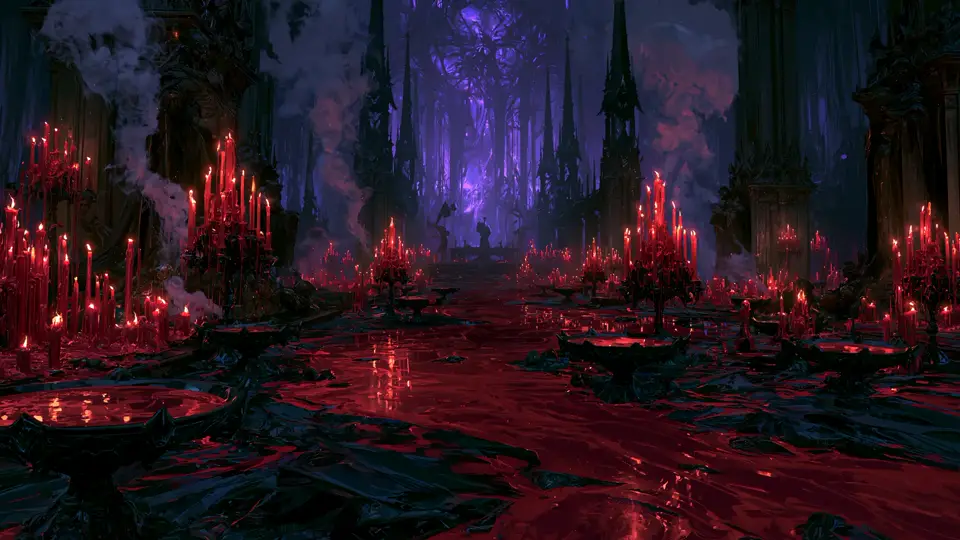
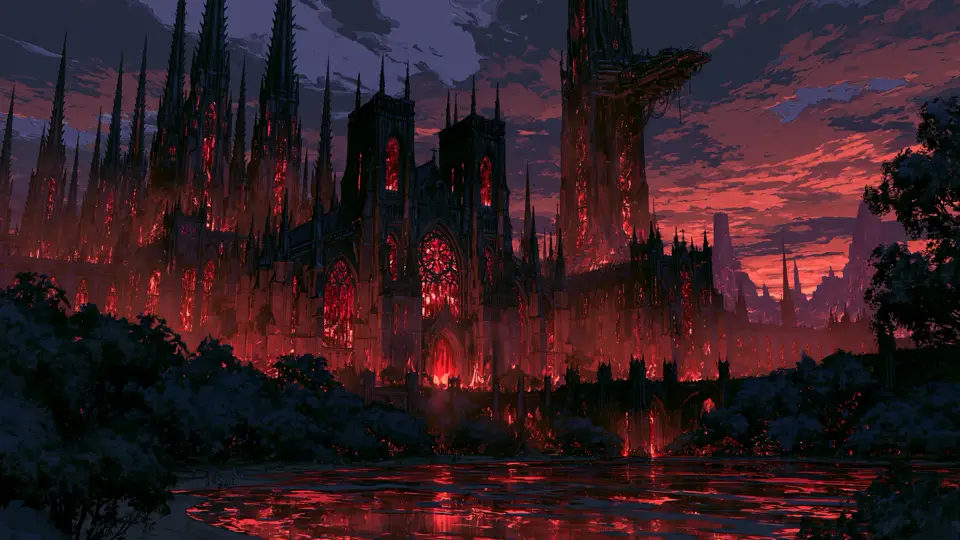
Generate a wide establishing image. Use a text-to-image tool to generate three or four versions of the wide shot that establishes the spatial context. Cathedral interior, late afternoon light, dust motes, altar at the far end. Generate variants until one captures the spatial setup you want. This image is the master frame for the scene.
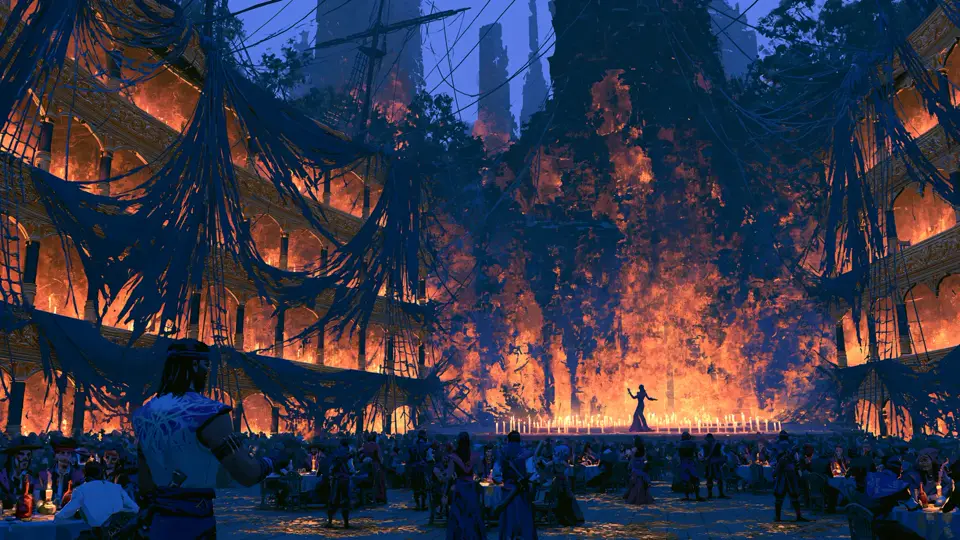
Generate the medium shots and close-ups. Once the wide shot is locked, use image-to-image variation to generate medium shots that respect the spatial setup. A medium shot showing the protagonist approaching the altar from the back-left, with the same lighting and geometry as the wide shot. A close-up showing what is on the altar. Image-to-image generation, where you feed an existing image as a starting point, preserves visual continuity across shots in a way that fresh text-to-image generations cannot.
Lock the visual order. Arrange the shots in the order you want the reader to experience them. Wide establishing. Medium tracking the protagonist’s approach. Close-up of the altar. Medium pulling back to show the thing turning. Wide showing the full geometry of the confrontation. This sequence is your storyboard.
Annotate each shot with its prose purpose. Beside each image, write the one-sentence purpose of the shot in prose terms. “Establish the scale of the cathedral and the smallness of the protagonist.” “Track her approach and her body language.” “Reveal what she sees.” The annotation is the bridge between the image and the prose you will write.
Write the prose against the storyboard. Now write the scene. Prose that captures what the images have already shown you. The blocking is fixed, the spatial relationships are clear, the visual rhythm is determined. Your job is to render in language what the pictures have already composed.
The whole process for a single scene is forty-five minutes to two hours, depending on scene complexity. Most writers find that the prose that comes out is two to three times faster to draft than usual, because the compositional thinking has already happened.
Choosing the Right Image Tool
The tool choices keep shifting, but the operational principles do not.
For consistent character appearance across multiple shots, you need either an embedding-trained character reference or a tool that supports character locking. Midjourney’s character reference, the latest Stable Diffusion controlnets, or a custom LoRA trained on your character all work. Without character consistency, your storyboard will show different-looking protagonists across shots and the spatial scaffolding will undermine itself.
For consistent location across shots, image-to-image variation is the key technique. Generate one master image of the location, then use that as the starting point for every subsequent shot. Most modern tools support some form of this. The discipline is to actually use it rather than starting fresh text-to-image generations for every shot.
For control over composition and framing, controlnet-style tools or in-painting workflows let you specify the spatial structure of a shot and have the image generation fill in the visual content. Useful when you need a specific blocking the model would not naturally produce.
For speed, fast-iteration tools matter more than the absolute peak quality of any single image. You want to generate five variants in two minutes, not one stunning image in twenty minutes. Storyboarding is rough drafting in image form. The final prose is the polished output, not the images.
A useful operational note: do not pay for your storyboards to be beautiful. They are working artifacts. They go in a private folder. They get discarded after the scene is written. The visual aesthetic is a tool for thinking, not an end product.
When the Image Is Wrong
The technique fails in specific predictable ways. Knowing the failure modes lets you catch them before they corrupt the prose.
The image is wrong but you write to it anyway. The model produced something that looks compelling but does not actually match the scene you need. You write to the compelling-but-wrong image. The prose ends up describing a scene that does not serve the story. Discipline: every image gets a sanity check against the original intent statement. If the image diverges from the intent, regenerate. Do not write to the wrong picture.
The image limits what you can imagine. A single generated image of the cathedral has now anchored your sense of the location. You no longer imagine the room. You describe the image. Your prose loses the freshness that prose-first thinking would have given it. Discipline: use the image as a sanity check on spatial relationships, not as a description prompt. After the storyboard is locked, close the images while you write the prose. Trust the spatial discipline to persist. If you find yourself transcribing what the image looks like rather than what the scene feels like, you have over-relied on the visual.
The aesthetic of the image leaks into your prose. Image generation has its own visual fingerprints. Specific kinds of lighting. Specific compositional defaults. Specific aesthetic gloss. Writers who study their generated images too long start to absorb the AI aesthetic and write prose that has the same gloss. Discipline: alternate visual study sessions with reading sessions in writers whose visual prose you admire. Let the literary aesthetic balance the AI aesthetic.
The image misleads you about characters. Faces generated by AI tend toward archetype. Bodies tend toward beauty conventions. If your protagonist is supposed to be physically distinctive, awkward, scarred, ordinary, the AI’s defaults will fight you. Discipline: write the character descriptions in your story bible first, then use them as constraints in the image generation. If the model cannot produce the right face after several tries, work from rough silhouettes and capture the body language rather than the features.
When Not to Storyboard
Some scenes lose more than they gain from this technique.
Interior monologue scenes. A character thinking, remembering, processing. The visual scaffolding adds nothing because the scene is not visual. Storyboarding these scenes is busywork.
Dialogue-driven scenes in static settings. Two characters talking across a kitchen table. The blocking is trivial. The work of the scene is in the exchange. Storyboarding distracts from the dialogue work that should dominate.
Atmospheric scenes that depend on what is unseen. Horror often works through implication. A scene where the protagonist senses something behind her in the dark should not be storyboarded by generating an image of what is behind her. The image undermines the implication.
Scenes that work through linguistic rhythm rather than visual experience. Prose poems. Lyrical interludes. Sequences that rely on the music of the sentences rather than the architecture of the scene. Storyboarding shifts your thinking toward visual logic at exactly the moment it should be entirely in the language.
The general principle: storyboard scenes where the reader needs to track spatial information, where the action’s choreography matters, or where the visual rhythm carries meaning. Skip storyboarding scenes where the work is internal, conversational, atmospheric-by-suggestion, or rhythmic.
Prose Discipline at the Desk
The most common failure mode of the technique is writers who storyboard well and then write descriptive prose that reads like an art lecture about their storyboards. Long visual paragraphs. Static blocking. Prose that paints the picture and stops there.
Three disciplines fix this.
Show the action through the picture, not the picture itself. A protagonist walks across the cathedral. The reader experiences the cathedral through her motion, her breath, her changing perspective. Not through a paragraph of architectural description.
Compress the visual into verbs. Most prose writers fall back on adjectives and nouns when describing visual scenes. Better verbs do more work. “She crossed the cathedral” is fine. “She walked the cathedral’s length” is more spatial. “The cathedral fell away behind her, vault by vault” is most spatial. Verbs carry blocking. Nouns and adjectives carry inventory.
Trust the reader to assemble the picture. A few precise spatial details establish the scene. The reader fills in the rest. Storyboarding tempts you to render every detail you have just composed. Resist. The art is in selection.
The storyboard is the scaffolding. The prose is what stays after the scaffolding comes down.
What Filmmakers Knew
Filmmakers learned a century ago that visual composition before dialogue produces better scenes. Prose writers have been working without that discipline for centuries longer than they needed to, because the tools did not exist. The tools now exist.
The technique is not universal. The risks are real. The aesthetic contamination is a genuine threat, and writers who lean on AI imagery too heavily produce work that has the visual fingerprints of the models that helped them. The defense is the same as for any tool: use it where it pays, discard it where it would harm, and never let the scaffolding become the building.
Storyboarded scenes, written well, have a clarity and choreography that pure prose-first composition rarely achieves. The first time you write an action sequence from a locked storyboard and an editor says “this scene plays in my head like a film” without you having mentioned the technique, you will know the practice is working.
Then close the images, open the document, and write.