The Living Tome: Building a Book You Step Into
A novel, as the market currently understands it, is a file. You buy it from a storefront that owns the customer relationship, that knows who read it while you do not. You read it in an application that flattens your typesetting, your drop caps, your section breaks, and the deliberate weight of your chapter openings into one reflowable river of text with a percentage at the bottom. When you reach the end, the only artifact that survives is the world the book built in your head. The container gave you nothing, because it was a compromise.
I spent today building the counter to that compromise. The beginnings of a reading environment, where the book is a place you enter and where the world I spent years building does not evaporate the moment the last page turns. This post is what I built, why each piece exists, and the larger bet underneath all of it: that the next decade of publishing belongs to the experience, and the writers who own their experience will own their readers.
The File Was Always a Compromise
It is worth being precise about what we surrendered when fiction became a file, because the loss is invisible to most readers and most writers have stopped noticing it.
The bound physical book was an interface. The heft told you how much remained. Flipping back to reread a passage was spatial and fast. Marginalia, dog-ears, the smell and weight of a specific edition: these were never sentimental extras. They were the reading experience, and they belonged to the object. The ebook traded all of it for portability and search, and then the platforms took one thing more, the thing that actually mattered to a working author. They took the relationship. You do not have readers. The store has customers, and it rents them back to you in the form of a sales rank.
Every modality we currently call publishing inherits this bargain. The serialized-fiction apps own the serialization. The audiobook platforms own the listener. The subscription readers own the subscription. In each case the writer supplies the one irreplaceable input, the work, and receives in exchange a number on a dashboard owned by someone else. The file is frictionless and endlessly copyable, and fungibility is the last thing you want your life’s work to carry.
The move worth making is to build something the file can never be.
What I Built Today
Three things, each of which treats the book as more than its text.
The Codex
The first is a Codex: an interactive atlas of the entire saga. Every character, faction, realm, artifact, and event across the books, rendered as a browsable, searchable world instead of an appendix. Today it crossed a hundred and seventy entries, each connected to the others by typed relationships, so that reading about a vampire princess leads you to the relic fused over her heart, which leads you to the cosmic entity that forged it, which leads you to the priesthood hunted nearly to extinction for opposing it. You do not read the Codex front to back. You traverse it. It is a graph, and moving through it is how you come to understand the way the world coheres.
It is also spoiler-aware, which is the part I am proudest of. The world has reveals in it, and a reference work that dumps every reveal on a first-time reader has betrayed them. So the Codex gates its own knowledge. The late revelations stay hidden behind a deliberate choice to see them, and even the visible entries hold their deepest secrets in reserve until you ask. A reference that respects the order in which you are allowed to know things understands that it is part of the story rather than a leak in it.
This is worldbuilding as a navigable object. The world bible that used to live in a private folder is now a place the reader can walk around inside.
The Tome
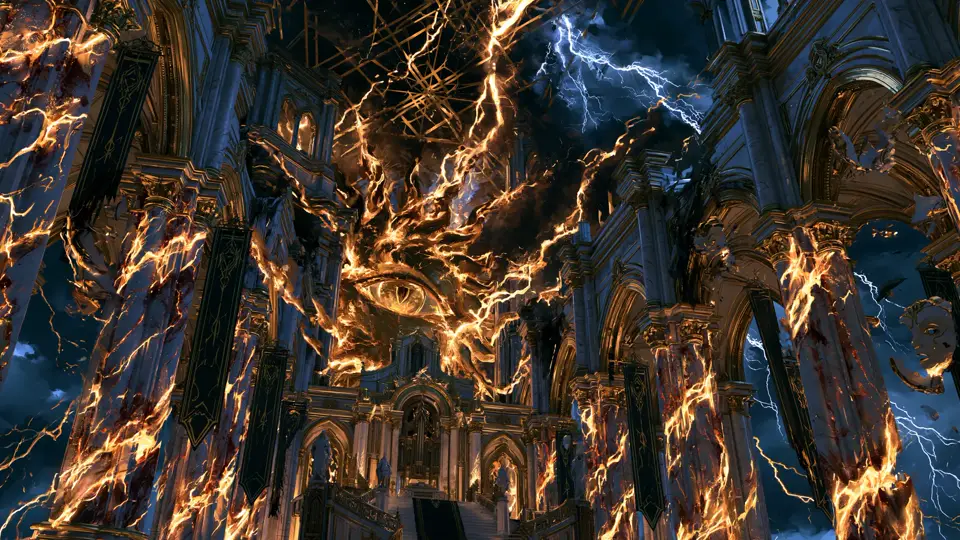
The second is the reader itself, and the principle here is that the container should carry the mood of the contents. Most reading apps are agnostic by design, the same gray rectangle around every book. I went the other way. The in-site reader is styled as a tome: a warm, dark, vellum page with edges scorched and charred, a faint arcane ember bleeding in from the borders, a glowing initial dropped into the first paragraph, an age gate for the work that earns one, your position remembered, the text searchable inside the book.
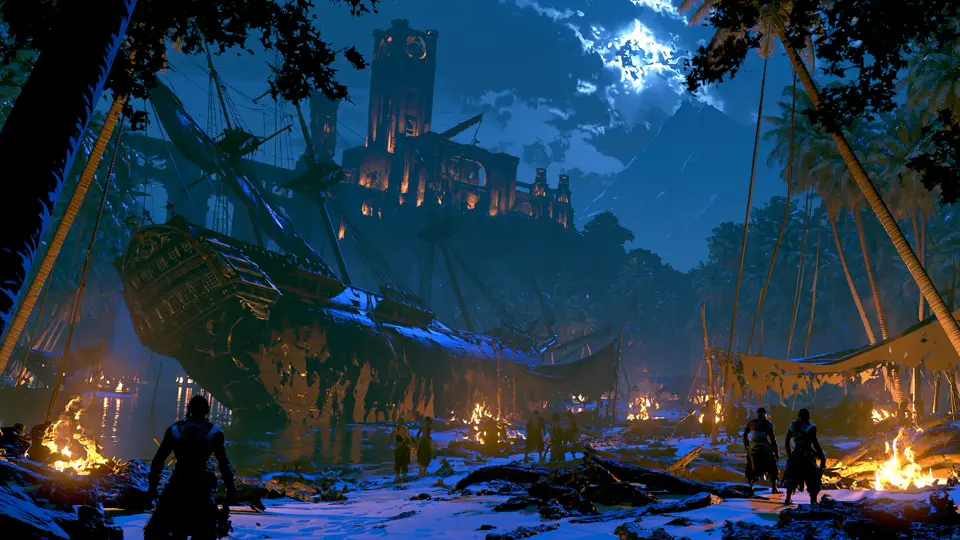
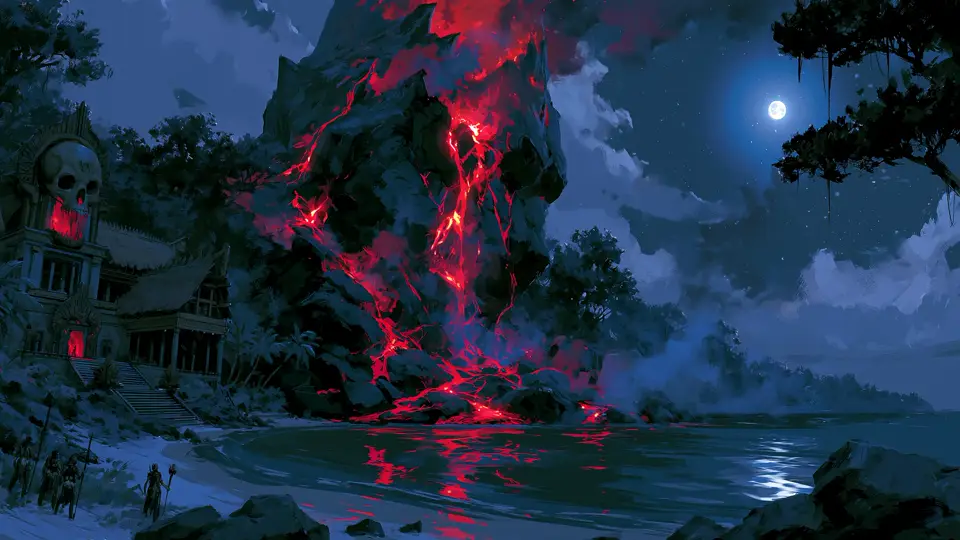
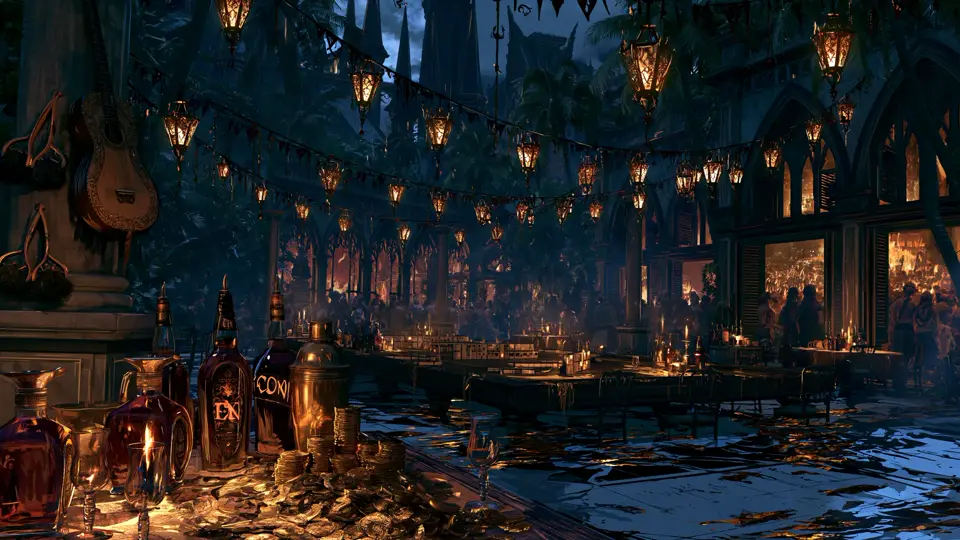
And it is themed per series. Open the steampunk grimdark and the ember burns crimson. Open the vampiric time-loop and it burns a cold electric blue. Open the cosmic crossover and the page carries its own light. The frame is doing real work. Before you have read a word, it tells you what kind of place you have walked into. The typography, the color, the weight of a chapter opening, all the things the file discarded, are back and doing the job they were always meant to do.
A reading experience is the difference between text and a book.
The Door Out of the Storefront
The third piece has no visible surface yet, and it is the most strategic. I wired up the ability to give the books away. Full text, free to read, on my own ground, with a path to print and to direct support for readers who want to own the object or back the work. The switch waits. The foundations are poured, one field per book away from going live, and I will throw it once the rest of the experience is worth arriving for.
Giving away the product sounds like a paradox, and it dissolves the moment you remember where the value actually lived. The value was always in the relationship. The storefront has been leasing that relationship to me at a markup for years, and the file was only ever the pretext. Free-to-read on my own site means the reader arrives at my door, inside my world, on my terms, and the experience is good enough that the transaction stops being the point. The book becomes the lever that ends my dependence on the only channel that was ever allowed to introduce me to a reader.
Why Experience Is the Direction
Put the three pieces together and the bet becomes clear. Reading is being unbundled from the file, and the writers who win the next decade will be the ones who rebuild it into something that cannot be ripped, mirrored, and resold as a fungible commodity.
A file can be copied perfectly and infinitely. An experience resists that. The Codex, the themed tome, the curated path through a world that knows what you are and are not ready to know, the eventual ability to step sideways out of the prose into the lore and back again without losing your place: none of it survives being exported to a generic reader, because all of it lives in the architecture around the text rather than in the text itself, and architecture is hard to counterfeit and impossible to commoditize.
There is a second reason, and it is specific to the kind of fiction I write. Dark, dense, interconnected worlds reward exactly the thing the file punishes: payoffs that land across books, a character glimpsed in one series who turns out to be the engine of another, a relic whose true nature only resolves three volumes later. The file gives the reader one linear pass and no way to hold the web in their head. An experience hands them the web. For a saga built on connection, the interactive layer is the only container that can hold the actual shape of the work.
The future I am building toward treats reading, exploring, and eventually playing inside a world as points on one continuum rather than separate products. A place where the reader who finished the book and the reader still living inside its world are simply the same person, and nobody bothers to draw the line between them.
The Discipline
The discipline matters more than the vision, so let me be exact about the failure mode I am steering around.
The prose stays sacred. No achievement dashboards, no pop-ups elbowing for attention beside the sentence in front of you, no turning a novel into a console. The experience exists to deepen the reading and never to interrupt it. Someone who wants nothing but the story, cover to cover, with no detour into the Codex and no thought spared for the architecture, gets a clean and total reading experience. The moment the interactive layer taxes the person who just wants the story, the layer is wrong, and the layer is what gives way.
Novelty for its own sake is the same trap wearing a different mask. Scorched page edges that hurt legibility would be a failure. A glossary popover that spoils a reveal would be a betrayal. A worldbuilding atlas so sprawling it intimidates a newcomer would defeat its own purpose. The rule that resolves every one of these is simple and absolute: the experience serves the story. The moment that inverts, I have built a toy and called it a book.
The whole bet rests on having both at once. The reader who wants only the prose gets a beautiful, uninterrupted tome. The reader who wants the world gets a door into it. Neither one pays for the other.
Where It Goes
What exists today is the spine. The reader still has to grow from previews into full, chaptered books, with a table of contents that slides in and out of view, chapter transitions that feel like turning a leaf, progress measured both within the chapter and across the whole spine, and comfort controls for the people who read for hours. The Codex wants to reach into the prose, so that a character’s name in the text can, if you choose to touch it, bloom into a small, spoiler-safe window onto who they are, then close again and leave you exactly where you were reading.
Past that sits the part I am most reluctant to oversell and most eager to build: a layer where the world becomes something you move through, a structured environment closer to a tabletop game than to a book, where the canon I have kept rigorous for years becomes a place with rules you can act inside.
That is a long arc, and I am one author with an AI-assisted workflow, not a studio. But the direction is set, and the direction is the entire point. Every piece I build earns its place by pushing the book further from being a file and closer to being a place.
What a File Can Never Be
The industry spent twenty years optimizing the file and produced a frictionless, interchangeable, rentable commodity that made platforms rich and made authors interchangeable. The answer is to make the book into something a file can never be: an experience that lives where you set the terms, carries the mood of the world it contains, knows what its reader is ready for, and rewards the depth you actually wrote.
I started today by treating the book as a place. I built a world you can wander, a tome that burns the color of the story you are reading, and a door onto turf I own. None of it is finished. All of it points the same way.
The next book you fall in love with will behave like a place. You will go there, and you will keep going back.