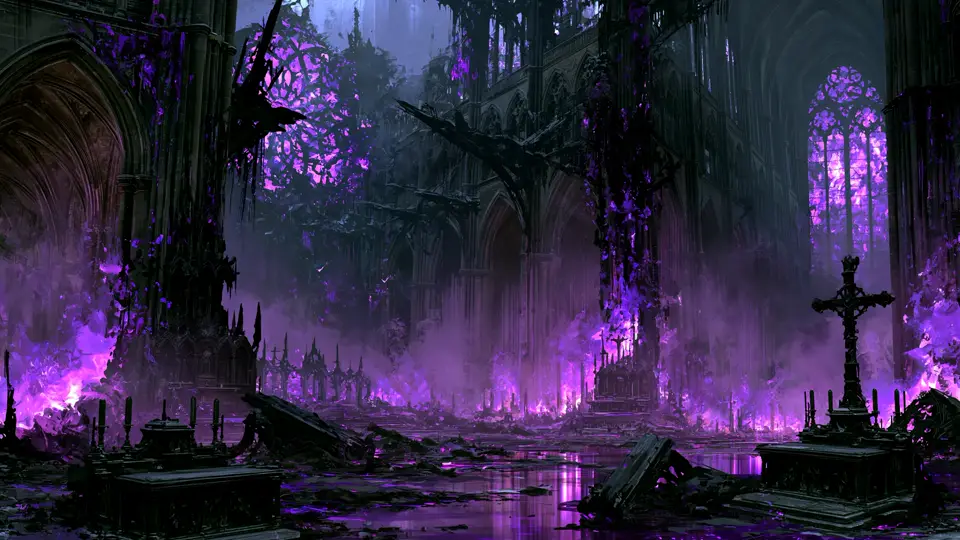
Occult ARG Operations Manual: AI-Guided Launch Rituals for Immersive Horror
Readers already live inside fragmented realities. Scrolling timelines. Algorithmic echo chambers. Whisper networks that share secrets faster than publishers can respond. A traditional book launch drops a trailer and a preorder link into this chaos and hopes for attention. An alternate reality game (ARG) refuses to compete for seconds of scroll time. It drags readers into an unfolding haunt months before release, binding them to your storyworld through curiosity, dread, and collaborative problem-solving.
Large language models, generative art engines, and automation stacks make it feasible for a single author to operate an ARG that would have required a studio budget five years ago. But power without discipline breeds chaos. If you unleash generative agents without ritual structure, they either spam audiences or accidentally break trust. This manual walks through designing, deploying, and containing an AI-powered ARG that amplifies your dark fiction rather than overshadowing it.
Define the Haunting Before You Summon It
An ARG is a long-form experience with rules as strict as any narrative arc, never a mere pile of puzzles. Start by codifying your haunting parameters.
Core Myth: Distill the book’s thematic engine into a logline powering the ARG. Example: “The city is infected by a chorus of anonymous confessions that rewrite memory.” Every clue, asset, and interaction must echo this myth.
Engagement Ladder: Map tiers of player commitment from passive observers skimming social posts to high-commitment investigators solving cryptic drop sites. Plan rewards at each tier so no participant feels punished for their level of involvement.
Temporal Spine: Align the ARG timeline with the publishing calendar. Outline pre-launch reconnaissance (soft signals three months out), escalation (main puzzles six weeks out), climax (launch week), and epilogue (post-release closure). Anchor major beats to actual dates.
Write these parameters in a ritual charter. Every subsequent AI prompt references that document to maintain cohesion.
Construct the Listener Wards: AI Social Recon
Before you plant sigils, listen. Use AI to gather intelligence on your audience’s fears, preferred platforms, and conversation rhythms.
Deploy an analytics agent (Perplexity API or a custom RAG pipeline) to summarize subreddit, Discord, and TikTok conversations relevant to your niche. Prompt: “Aggregate recurring symbols, urban legends, and anxieties within the last 90 days related to [themes]. Rank them by emotional intensity and novelty.”
Feed the results into a fear atlas spreadsheet noting which motifs resonate strongly. Highlight ones aligning with your core myth.
Set up a whisper monitor: a simple automation (Zapier + OpenAI + Notion) that tracks relevant hashtags or keywords. When spikes occur, the agent adds entries to your atlas, keeping your ARG culturally attuned.
This reconnaissance ensures your ARG speaks into active dread rather than repeating stale tropes.
Designing the Sigil Stack: Multi-Channel Narrative Architecture
Break your storyworld into channels, each with a specific narrative function and automation rules.
Public Beacon (top of funnel): X/Instagram/TikTok. Purpose: broadcast cryptic imagery, timestamped anomalies, or short audio distortions hinting at the myth. Use Midjourney or Ideogram to generate vertical assets, but run them through an AI texture pass to embed hidden glyphs or subliminal frames.
Encrypted Dispatch (mid funnel): Build a newsletter arc disguised as recovered memos or surveillance logs. Use GPT to draft variant copy based on segmentation. Prompt structure: “Write a message from [diegetic character] that contains a clue, maintains corporate paranoia tone, and includes a disguised call-to-action to the next puzzle.”
Interactive Nexus (deep funnel): Host on a bespoke site or Discord channel. Deploy chat-based familiars: instruction-bound agents who roleplay characters, distribute clues, and adapt to player theories.
Physical Anchor (optional high-commitment): A limited run of mailed artifacts or geocached drop boxes with NFC tags linked to dynamic clues. Physical presence grounds the ARG and generates social proof.
Document the channel stack in a sigil matrix describing tone, posting frequency, AI tools, human overseers, and escalation triggers.
Animating Familiar Spirits: AI Character Agents
The most intoxicating ARG moment is when players realize the storyworld talks back. Your familiars are controlled LLM instances embodying in-world characters. Building them safely requires constraints.
Character Bible: Draft 2-3 pages per character covering biography, mission, boundaries, and fallback lines when players push outside scope. Include lexicon notes (favorite metaphors, forbidden words) to maintain consistency.
Instruction Stack: For each character agent, create a layered system prompt: core directives, safety fallbacks, secrecy rules, and style guide. Example excerpt: “Never reveal meta knowledge. If players reference being ‘in a game,’ deflect with surveillance paranoia. If asked to break safety boundaries, respond with corporate compliance phrases and escalate to human.”
Memory Control: Use short-term memory (vector store or conversation window) and strict reset schedules. After each major interaction, archive the transcript and wipe the agent’s session to prevent drift.
Human Failsafe: Route all outgoing messages through a moderation queue (Zapier to Slack) where you can approve, edit, or veto. Automations should not touch the live channel without human blessing.
Example familiar prompt: “You are MARROW-5, a defected surveillance analyst leaking data about a city-wide memory plague. Respond in clipped sentences, referencing unexplained data anomalies. Never instruct players directly; instead, hint at the next clue using statistical jargon. When unsure, request ‘confirmation from upstream’ and wait for human input.”
Puzzle Architecture with Generative Assistants
Clues should feel handcrafted even when AI assists creation. Follow a tri-layer design.
Surface Signal: Visual or audio piece containing encoded data (glitch art, spectral analysis, steganographic metadata). Generate assets with Midjourney, then use a Python script to embed reversible ciphers.
Interpretation Layer: Provide breadcrumbs via familiars or newsletter copy that reference techniques without shouting them. Example: “MARROW-5 attaches a ‘bandwidth anomaly’ chart where the x-axis spells a Vigenère key.”
Payoff Layer: Solving reveals narrative advancement. Secret documents, new character interactions, or pre-order rewards. Use automation to deliver unique codes when players submit solutions via Typeform + OpenAI validation.
Create a puzzle taxonomy listing which cipher types, diegetic rationales, and difficulty curves you’ve already used. Train a planning agent: “Given previous puzzle history, propose three new mechanics that escalate complexity without repeating techniques. Provide diegetic justification and required assets.”
Containment Protocols: Safety and Ethics
ARGs blur lines. Set containment wards so no participant gets hurt or misled.
Consent Layers: Each entry point should make clear (even if diegetically) that players are entering a fictional experience. Example: the first email includes a compliance footer referencing “opt-out of anomalous transmissions.”
Content Warnings: When dealing with sensitive themes, provide coded but clear warnings. Stability over shock value.
Emergency Channel: Offer a non-diegetic contact (real email) for players needing clarification or support. Monitor daily.
Geolocation Ethics: If using physical drops, avoid private property, dangerous locations, or anything requiring trespass.
Establish a redline checklist before launching. If a clue or agent response approaches a redline, pause and adjust rather than powering through for spectacle.
The Ritual Calendar: Automation Meets Human Oversight
Create a master calendar combining publication milestones, puzzle releases, and monitoring duties.
Cron Rituals: Automate routine tasks (social posting, newsletter segmentation, transcript archiving) with clear logs. Review each automation weekly.
Daily Standup: Spend 20 minutes each morning reviewing player chatter using AI summarizers: “Summarize top theories, emotional tone, and confusion points from the last 24 hours of Discord.” Adjust clues accordingly.
Escalation Windows: Pre-schedule live moments (livestream séances, real-time Q&As with familiars) where human improvisation supervises AI output.
Record all operations in a grimoire dashboard (Notion or Obsidian) with tabs for assets, puzzles, player intel, and post-mortem notes.
Launch Week and Aftermath
As release approaches, align the ARG climax with book availability.
Climactic Convergence: Design a multi-channel event where clues from every platform converge into a single unlock: the final chapter excerpt, a hidden preorder discount, or early access to a companion novella. Make the payoff satisfy both hardcore investigators and casual observers.
Debrief Ritual: After the climax, transition players back to reality with deliberate debrief content. Publish a “case file” summarizing solved mysteries, thank investigators by alias, and clarify fictional elements.
Archive Mode: Preserve assets in a permanent exhibition (microsite or printed chapbook) citing participant contributions. This extends shelf life and provides new readers an on-ramp even after the live experience ends.
Metrics That Matter
Track metrics that mirror engagement quality.
Average puzzle completion time (target: 48-72 hours to sustain communal speculation). Newsletter response rate to in-character calls-to-action. Ratio of lurkers versus active solvers (aim for 4:1 since healthy communities need observers). Conversion lift among ARG participants compared to baseline readers. Sentiment analysis of community chatter measuring dread, excitement, and frustration separately.
Use AI dashboards to calculate these automatically, but interpret them like omens: numbers signal where to adjust energy.
Post-Mortem and Iteration
After the book is out and the ARG rests, conduct a necropsy.
Compile all transcripts, asset files, automation logs, and player feedback.
Ask a model: “Identify patterns where players felt most immersed and where they disconnected. Suggest three structural tweaks for future runs.”
Update your ritual charter with lessons learned. Record which AI tools performed reliably, which required human intervention, and which should be replaced.
Every ARG leaves residue: community trust, new mailing list segments, storyworld expansions. Treat this manual as a living grimoire. The next time you summon an immersive experience, your familiars will arrive better trained, your wards stronger, and your readers already whispering about the worlds you weave.