Summoning the Unknowable: AI as Your Cosmic Horror Collaborator
Cosmic horror presents challenges no other genre faces. You’re trying to convey the incomprehensible. Describe the indescribable. Maintain the delicate balance between revealing too much and too little. The genre’s central problem is rendering in language what language cannot contain.
Different AI tools have different strengths when channeling cosmic horror. Like the specialized entities of occult tradition, each has its own nature, its own gifts, its own dangerous tendencies. Summon the wrong one for your needs, and you’ll get generic tentacles and recycled Lovecraft pastiche. Summon correctly, and you’ll channel genuine cosmic dread.
The Pantheon of Digital Horrors
Claude: The Existential Philosopher
Claude tends toward existential dread and philosophical horror. It handles the weight of cosmic insignificance, generating prose that makes readers question their place in an indifferent universe.
Summoning ritual: “Generate internal monologue for a character who has just comprehended that free will is an illusion and all human achievement is cosmic dust. Don’t mention these concepts directly. Show their dawning horror through physical sensations and fragmenting thoughts.”
What emerges: Deep, unsettling passages that create dread through implication rather than description.
GPT-4: The Geometry Defiler
GPT-4 handles non-Euclidean descriptions and impossible architecture well. It can describe spaces that shouldn’t exist in ways that make geometric sense to readers while remaining fundamentally wrong.
Summoning ritual: “Describe a room where all angles are acute yet it has eight corners. The walls meet in ways that allow someone to walk on what should be the ceiling. Focus on how this affects perception and movement, not just appearance.”
What emerges: Spatially disturbing descriptions that make readers feel mentally off-balance.
Midjourney: The Vision Granter
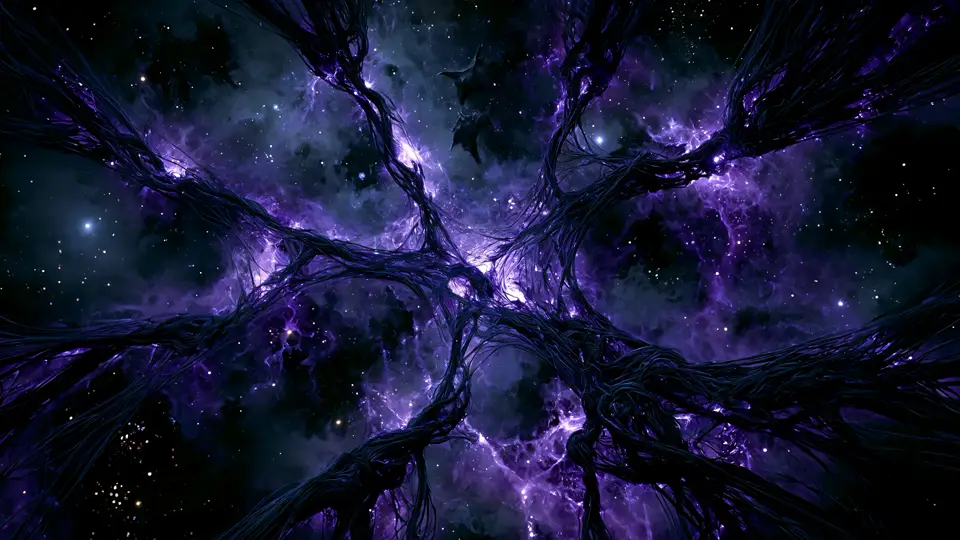
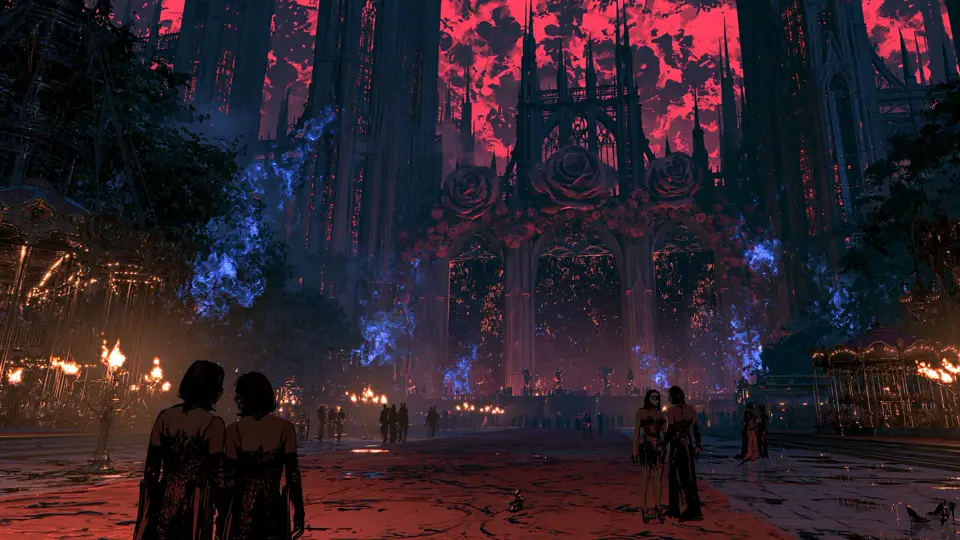
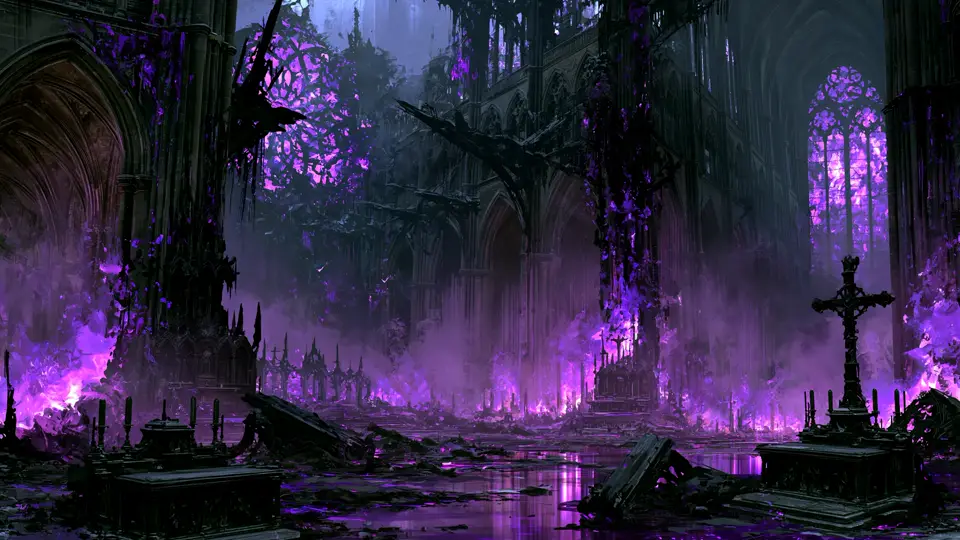
For cosmic horror, Midjourney serves as a window into impossible vistas. It creates visual references for things that shouldn’t exist.
Summoning ritual: “Vast biological city grown from single organism, non-Euclidean architecture, impossible scale, style of Zdzisław Beksiński meets H.R. Giger, atmospheric perspective showing human insignificance —ar 16:9 —v 6”
What emerges: Visual anchors that maintain atmospheric consistency across your narrative.
The Lovecraft Protocol: Training Your Digital Servants
AI defaults to explaining things. Cosmic horror dies when explained. The Lovecraft Protocol trains AI to maintain mystery while building dread.
Rule 1: Never Fully Describe
Wrong: “The creature had tentacles and multiple eyes”
Right: “Something about its form suggested boundaries between states of matter were merely human conventions”
Rule 2: Focus on Effect, Not Cause
Wrong: “The alien god spoke”
Right: “Words formed in consciousness without passing through ears, leaving geometric patterns where memories should be”
Rule 3: Corrupt the Familiar
Wrong: “The alien city was unlike anything on Earth”
Right: “The city’s architecture made me realize every building I’d ever entered was wrong, built by instincts we’d inherited from something that wasn’t quite human”
Collaborative Madness: Fracturing Narrative Reliability
Cosmic horror often requires unreliable narrators whose sanity fragments as they glimpse truth. Different AI tools create different types of narrative breakdown.
Claude for philosophical dissolution: “Write journal entries for someone who realizes language itself is an infection from outside spacetime. Show their attempts to communicate this discovery as their ability to use words correctly deteriorates.”
GPT-4 for perceptual breakdown: “Create a scene where a character sees reality’s source code. They’re trying to describe it in terms of familiar objects, but every comparison makes less sense than the last.”
Character.AI for dialogue degradation: Create custom characters who’ve witnessed cosmic truth. Their speech patterns should be internally consistent but fundamentally wrong.
Languages That Shouldn’t Exist
Cosmic horror often requires inhuman languages. Different approaches to linguistic impossibility serve different purposes.
The structural method: Create languages based on impossible phonemes. “Generate fragments of a language that uses colors as vowels and mathematical concepts as consonants. Show how attempting to pronounce it affects human vocal cords.”
The psychological method: Focus on languages that corrupt thought. “Generate text in an alien language that changes meaning based on the reader’s sanity level. Include translation notes showing how the same passage means different things to different minds.”
The synthesis method: Use one tool to create the linguistic structure, another to explore its psychological effects. Combine outputs for maximum unsettling impact.
Creating Corruption Arcs
Character corruption in cosmic horror follows specific patterns. AI maintains consistency while showing gradual dissolution.
Phase 1, Initial Contact: Generate subtle wrongness. Characters notice insignificant details that don’t quite fit.
Phase 2, Growing Awareness: Describe expanding perception. Characters see connections between unrelated events.
Phase 3, Terrible Understanding: Handle the philosophical implications. Characters grasp truths that recontextualize all human experience.
Phase 4, Transformation/Dissolution: Combine approaches for maximum impact. Language breaks down. Perception shifts. Humanity becomes optional.
Managing AI’s Explanatory Instinct
The biggest challenge: AI wants to explain everything. Cosmic horror dies when explained. Techniques for maintaining mystery:
The redaction technique: Generate full explanations, then strategically delete. What remains suggests vast hidden truth.
The contradiction method: Generate conflicting explanations for the same phenomenon using different prompts or tools. The incompatibility suggests truth beyond human comprehension.
The fragment approach: Generate ancient texts, then only include damaged portions. Gaps become more terrifying than content.
Prompt Frameworks
For existential dread: “Show character realizing [cosmic truth] through physical sensations and behavioral changes. Never state the truth directly.”
For impossible descriptions: “Describe [impossible thing] in terms of how it affects physics around it, not what it looks like.”
For architectural horror: “Create architecture that follows [non-Euclidean principle] while remaining navigable by human characters.”
For atmospheric consistency: Include mood descriptors, artist references, and scale indicators. Avoid literal monster descriptions. Avoid excessive detail. Avoid explaining the incomprehensible.
The Summoning Circle: Integrated Workflow
A workflow for AI-assisted cosmic horror:
Foundation: Establish philosophical theme and existential stakes. What truth will destroy your characters?
Architecture: Build impossible settings and non-Euclidean spaces. Where does this horror live?
Visualization: Create atmospheric references. What should readers see in their minds?
Corruption: Layer in gradual dissolution of reality and sanity. How does exposure change your characters?
Synthesis: Combine outputs, emphasizing contradiction and incompleteness. What remains unknown?
Avoiding the Tentacle Trap
Common cosmic horror failures and solutions:
Generic Lovecraft pastiche emerges when prompts include tentacles, fish-people, and the word “indescribable.” Ban these from prompts. Force originality.
Over-explanation kills mystery. Generate three times the content you need. Use only fragments.
Inconsistent cosmic rules confuse readers without creating dread. Create a “physics document” defining what’s possible in your universe. Reference it when prompting.
Cardboard cultists bore readers. Give cultists relatable motivations corrupted by cosmic truth. They should be tragic, not merely evil.
The Final Binding
You’re not summoning AI to write cosmic horror for you. You’re channeling specific capabilities to create something genuinely unsettling. Each tool offers a window into different impossibilities. Your job is knowing which window to open when, and more importantly, when to slam it shut before too much spills through.
The cosmos is vast, indifferent, and fundamentally hostile to human comprehension. Your AI collaborators, properly summoned and bound, can help you share that terrible truth with readers brave enough to glimpse it.
Just don’t look too long yourself.